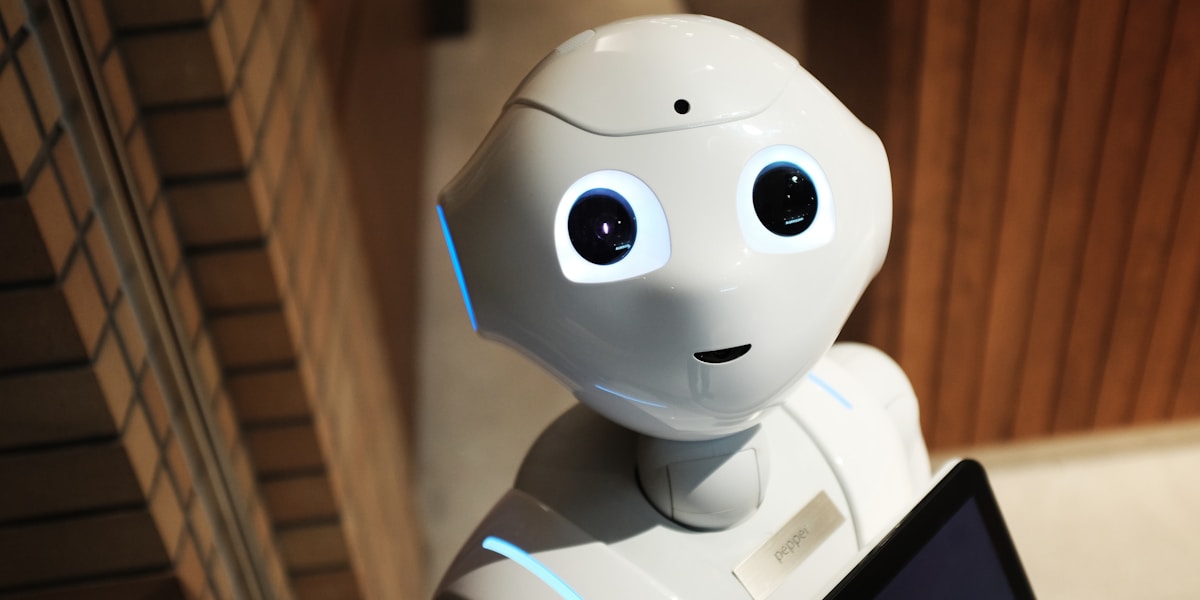
Sanctuary AI is building what might be the most ambitious technology in Canada: humanoid robots with human-like intelligence. Founded in Vancouver by serial entrepreneur Geordie Rose, the company has raised over 140 million USD to create Phoenix—a general-purpose robot designed to work alongside humans in retail, manufacturing, and logistics.
This is the complete story of Sanctuary AI—from its founding in 2018 to its current race against Tesla, Figure AI, and Boston Dynamics to define the future of work.
What Is Sanctuary AI?
Sanctuary AI is a Vancouver-based robotics company developing general-purpose humanoid robots powered by artificial intelligence. Unlike industrial robots designed for single tasks, Sanctuary's Phoenix robot is designed to perform any task a human can do.
Quick Facts
Sanctuary AI's core thesis is that the labor shortage—projected at 85 million workers globally by 2030—requires a new category of robot: one that can learn any task, work in any environment, and collaborate safely with humans.
Who Founded Sanctuary AI?
Sanctuary AI was founded in 2018 by four co-founders with backgrounds spanning quantum computing, robotics, AI research, and entrepreneurship.
The Founding Team
The founding team brought unique credentials: Rose had already built and exited two groundbreaking companies, Gildert was a physicist turned AI researcher, and Agrawal brought academic credibility and connections to Canada's AI ecosystem through the Creative Destruction Lab.
Who Is Geordie Rose?
Geordie Rose is one of Canada's most prolific deep-tech entrepreneurs. His journey from quantum computing to robotics spans three companies, billions of dollars in value creation, and some of the most ambitious technological bets in Canadian history.
Geordie Rose's Entrepreneurial Journey
D-Wave: The Quantum Computing Pioneer
Rose co-founded D-Wave Systems in 1999, creating the world's first commercial quantum computing company. D-Wave built quantum annealers—specialized quantum computers for optimization problems—and sold systems to Google, NASA, and Lockheed Martin for 10-15 million USD each.
D-Wave proved that exotic physics could become commercial technology. Rose learned how to fundraise for seemingly impossible deep-tech projects and how to navigate the gap between laboratory demonstrations and commercial products.
Kindred: Reinforcement Learning in Production
In 2014, Rose and Gildert founded Kindred Systems to apply reinforcement learning to robotics. Kindred became the first company to deploy reinforcement learning in production robots at scale.
The company's robots learned to pick and pack items in e-commerce warehouses—a task that sounds simple but requires handling thousands of different objects with varying shapes, weights, and fragility.
"Kindred was the first to prove that reinforcement learning could work in real-world production environments, not just simulations." — Industry analysis of Kindred's contribution
In 2020, British online grocery company Ocado acquired Kindred for 262 million USD (339 million CAD). The acquisition validated Rose's thesis that AI-powered robotics could command premium valuations.
The Pattern: Exotic Technology to Commercial Application
Rose's career follows a consistent pattern:
- Identify exotic technology others dismiss as impractical
- Build a company to commercialize it
- Raise significant capital on the strength of the vision
- Exit or transition before full commercial scale
This pattern would repeat at Sanctuary AI—with a more turbulent outcome.
What Is the Phoenix Robot?
Phoenix is Sanctuary AI's humanoid robot—designed to perform any physical task a human can do, from retail work to manufacturing to logistics.
Phoenix Specifications
Phoenix's Design Philosophy
Unlike industrial robots that prioritize speed and precision for specific tasks, Phoenix prioritizes:
- Human-like form factor — Can work in environments designed for humans
- General-purpose manipulation — Hands with 20 degrees of freedom can handle diverse objects
- Safe collaboration — Designed to work alongside humans, not replace them
- Continuous learning — Can learn new tasks through demonstration and practice
The human form factor is strategic: it means Phoenix can work in existing warehouses, stores, and factories without expensive retrofitting.
Phoenix Generations
Sanctuary has iterated rapidly on Phoenix, with each generation adding capabilities:
The 7th generation marked a significant breakthrough: Phoenix could learn new tasks in under 24 hours, compared to weeks for earlier versions. This accelerated learning capability is critical for commercial viability—customers can't wait weeks to deploy robots for new tasks.
What Is Carbon AI?
Carbon AI is Sanctuary's proprietary AI system that powers Phoenix. It's designed to give robots human-like general intelligence—the ability to reason, plan, and adapt to novel situations.
Carbon AI Architecture
Carbon AI integrates multiple AI paradigms that are typically separate:
- LLMs handle language and high-level reasoning
- Deep learning processes sensory input
- Reinforcement learning optimizes physical actions
- Symbolic reasoning enables planning and logical deduction
This multi-paradigm approach mirrors how human cognition works—we don't use a single algorithm for everything.
Large Behavior Models
Sanctuary introduced the concept of Large Behavior Models—analogous to Large Language Models, but for physical actions instead of text. The idea: train on massive datasets of human behavior to create models that can generalize to new physical tasks.
"Just as LLMs learned language from internet-scale text data, Large Behavior Models will learn behavior from massive datasets of human demonstrations." — Sanctuary AI on their technical approach
The 8th generation Phoenix is specifically optimized for data capture—collecting the behavioral data needed to train these models.
How Much Has Sanctuary AI Raised?
Sanctuary AI has raised over 140 million USD across multiple funding rounds, making it one of the best-funded robotics startups in Canadian history.
Funding History
Key Investors
The investor roster emphasizes strategic partners over pure financial investors—companies that can help deploy Phoenix in their operations or provide manufacturing expertise.
What Partnerships Has Sanctuary AI Formed?
Sanctuary AI has formed partnerships with major technology and industrial companies to accelerate development and deployment.
Microsoft Partnership (May 2024)
In May 2024, Microsoft and Sanctuary AI announced a partnership to develop AI models for general-purpose robots:
The Microsoft partnership gives Sanctuary access to Azure's AI infrastructure and Microsoft's research in multimodal AI—critical for Carbon AI's development.
Magna Partnership (April 2024)
Magna International, one of the world's largest automotive suppliers, partnered with Sanctuary to:
- Manufacture Phoenix robots — Magna's manufacturing expertise to scale production
- Deploy Phoenix in Magna facilities — Pilot deployments in Magna's own operations
- Develop commercial applications — Joint go-to-market for automotive and industrial customers
Magna brings manufacturing at scale—a capability Sanctuary lacks internally.
Canadian Tire / Mark's Retail Pilot (March 2023)
In March 2023, Sanctuary ran a week-long pilot at a Mark's retail store (owned by Canadian Tire Corporation):
The pilot demonstrated Phoenix's versatility—110 different tasks in a single week, in a real retail environment with customers present.
What Happened to Sanctuary AI's Leadership?
2024 was a turbulent year for Sanctuary AI, with significant leadership changes and workforce reductions.
Timeline of Leadership Changes
Why Did Geordie Rose Leave?
The board removed Rose as CEO in November 2024, reportedly due to disagreements over strategy and fundraising pace. Sources indicate tensions between Rose's ambitious technical vision and the board's desire for faster commercialization.
Rose announced he would walk 8,000 kilometers across Canada—from Victoria to St. John's—and has launched a new venture, Snowdrop Quantum Applications, focused on quantum computing software.
James Wells Takes Over
James Wells became CEO, bringing a different background to leadership:
Wells' appointment signals a shift from research-driven to commercialization-driven leadership.
What Is Sanctuary AI's Current Situation?
As of January 2025, Sanctuary AI faces both significant challenges and opportunities.
Current Challenges
Current Opportunities
Sanctuary is reportedly exploring acquisition of Rapid Robotics, a San Francisco-based robotics company, and sold its stake in Apptronik (purchased for 10M USD in 2022) for a gain.
How Does Sanctuary AI Compare to Competitors?
Sanctuary AI competes in the emerging humanoid robot market against well-funded rivals.
Competitive Landscape
Sanctuary's Differentiation
Sanctuary argues it has advantages despite smaller funding:
- Canadian talent — Access to world-class AI researchers at lower cost
- General-purpose focus — Not optimizing for single use case
- Carbon AI — Integrated multi-paradigm AI system
- Strategic partners — Microsoft, Magna provide capabilities, not just capital
However, the funding gap is significant: Figure AI alone has raised more than 5x Sanctuary's total funding.
What Are the Lessons from Sanctuary AI?
Sanctuary AI's journey offers insights for Canadian deep-tech founders.
Lesson 1: Serial Entrepreneurship Enables Ambitious Bets
Geordie Rose's track record at D-Wave and Kindred gave him credibility to raise 140M+ USD for humanoid robots—a category that would seem impossibly ambitious for a first-time founder.
Lesson 2: Strategic Investors Matter for Hardware
Magna's manufacturing partnership and Microsoft's AI partnership provide capabilities Sanctuary couldn't build internally. Hardware startups need more than financial capital.
Lesson 3: Leadership Transitions Are Risky
The departure of both co-founders (Gildert in April, Rose in November) within eight months created significant organizational disruption.
Lesson 4: Timing and Capital Intensity
Humanoid robots may be a "right technology, wrong timing" bet. The market is emerging, but commercialization requires billions in capital that Sanctuary's 140M USD may not provide.
Frequently Asked Questions
What is Sanctuary AI?
Sanctuary AI is a Vancouver-based robotics company founded in 2018 that develops general-purpose humanoid robots. Its flagship product, the Phoenix robot, is designed to perform any physical task a human can do, powered by the company's Carbon AI system. Sanctuary has raised over 140 million USD from investors including Microsoft, Magna, and Bell.
Who founded Sanctuary AI?
Sanctuary AI was founded in 2018 by Geordie Rose (CEO until November 2024), Suzanne Gildert (CTO until April 2024), Ajay Agrawal (Creative Destruction Lab founder), and Olivia Norton. Rose previously founded D-Wave (quantum computing) and Kindred Systems (sold to Ocado for 262M USD).
What is the Phoenix robot?
Phoenix is Sanctuary AI's humanoid robot—170cm tall, 70kg, with 20 degrees of freedom per hand. It's designed to perform general-purpose tasks in retail, manufacturing, and logistics. The 8th generation Phoenix (February 2025) can learn new tasks in under 24 hours.
What is Carbon AI?
Carbon AI is Sanctuary's proprietary artificial intelligence system that powers Phoenix. It integrates large language models, deep learning, reinforcement learning, symbolic reasoning, and memory systems to create human-like general intelligence for robots.
Who is Geordie Rose?
Geordie Rose is a Canadian deep-tech entrepreneur who founded three companies: D-Wave Systems (1999, quantum computing), Kindred Systems (2014, sold to Ocado for 262M USD), and Sanctuary AI (2018). He was removed as Sanctuary's CEO in November 2024 and is now working on Snowdrop Quantum Applications.
What happened to Sanctuary AI's founders?
Both co-founders departed in 2024: CTO Suzanne Gildert left in April 2024, and CEO Geordie Rose was ousted by the board in November 2024. James Wells, who joined Sanctuary in 2018 as Chief Commercial Officer, became CEO.
How much has Sanctuary AI raised?
Sanctuary AI has raised over 140 million USD, including a 75.5M CAD Series A in March 2022 (led by Bell, Magna, Verizon Ventures) and 30M USD from Canada's Strategic Innovation Fund. As of January 2025, the company is seeking an additional 10M USD convertible note.
Who are Sanctuary AI's competitors?
Sanctuary AI competes with Tesla (Optimus), Figure AI (700M+ USD funding), Boston Dynamics (Atlas, owned by Hyundai), and Agility Robotics (Digit). These competitors have significantly more funding and manufacturing capacity.
Related Reading
Vancouver AI Ecosystem
- Vancouver AI Ecosystem Guide — The city's tech landscape
- D-Wave Quantum Computing Guide — Geordie Rose's first company
- Canadian AI Unicorns — Billion-dollar success stories
Canadian AI Leaders
- Geoffrey Hinton Complete Guide — The Godfather of AI
- Yoshua Bengio Complete Guide — Montreal's AI pioneer
- Joelle Pineau Complete Guide — From FAIR to Cohere
Robotics and AI
- Canadian AI Startups Landscape — Who's building what
- AI Salaries Canada 2026 — Compensation at robotics companies
- Element AI Rise and Fall — Lessons from another ambitious Canadian AI company
Join AGI House Canada to connect with robotics and AI builders shaping the future. Scan the QR code to join our WhatsApp group or subscribe to our newsletter.
Data current as of January 2026. Information from TechCrunch, BetaKit, Globe and Mail, company announcements, and industry reporting.


