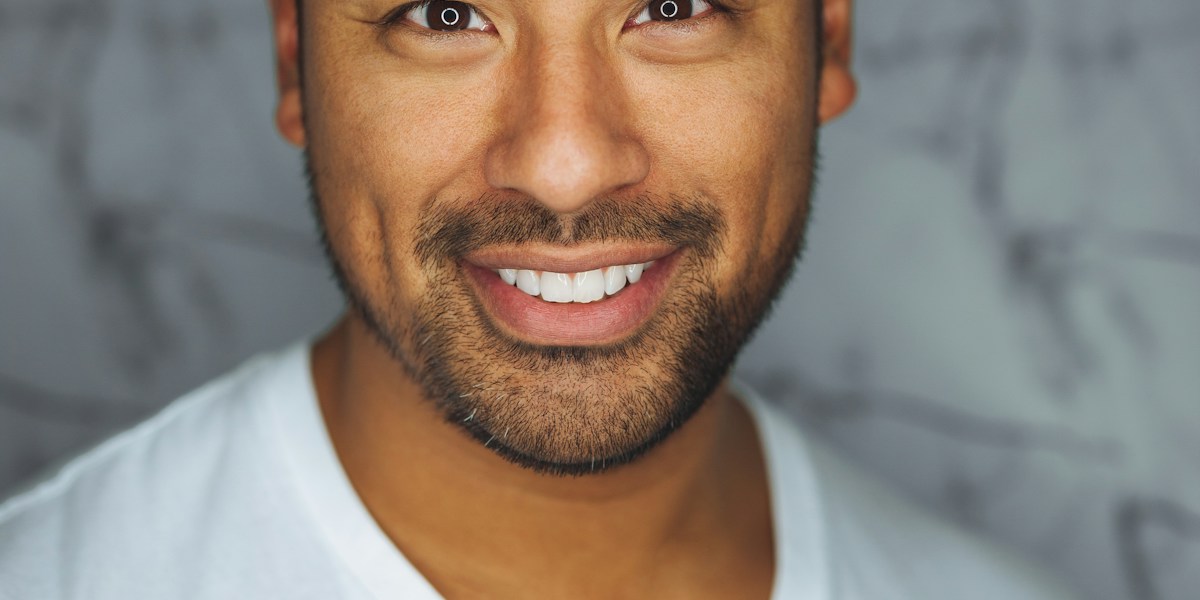
Yoshua Bengio didn't just pioneer deep learning—he invented the attention mechanism that powers ChatGPT, trained the creator of GANs, and became the first AI researcher to reach 1 million Google Scholar citations. Now he's building LawZero, a $30 million bet that AI can be made safe by design.
Who Is Yoshua Bengio?
Yoshua Bengio is a Canadian computer scientist who co-invented modern deep learning and now leads global AI safety efforts. As founder of Mila—the world's largest academic AI research lab—and co-recipient of the 2018 Turing Award, Bengio has shaped how machines learn for over three decades.
Unlike Geoffrey Hinton, who left Google to warn about AI dangers, or Yann LeCun, who remains optimistic about AI safety, Bengio represents a third path—actively building alternatives to dangerous AI systems while advocating for regulation.
What Did Yoshua Bengio Invent?
Bengio's technical contributions form the backbone of modern AI systems. Every time you use ChatGPT, Google Translate, or voice assistants, you're using technology he pioneered.
Key Technical Contributions
The Attention Breakthrough
In 2014-2015, Bengio and his students developed the attention mechanism—arguably the most important innovation in AI since backpropagation. This technique allows neural networks to focus on relevant parts of input data, enabling:
- Neural machine translation — Google Translate's breakthrough
- Transformer architecture — The foundation of GPT, Claude, and all modern LLMs
- Vision transformers — How AI "sees" images today
"The attention mechanism was a conceptual breakthrough. Before, neural networks processed sequences step by step. Attention let them look at everything at once and decide what matters." — Yoshua Bengio on the attention mechanism
The 2017 "Attention Is All You Need" paper by Google that introduced transformers explicitly built on Bengio's attention research—the architecture behind every major AI system today.
Training Ian Goodfellow
In February 2014, one of Bengio's PhD students had an idea at a Montreal bar: what if two neural networks competed against each other? That student was Ian Goodfellow, and the idea became Generative Adversarial Networks (GANs).
Bengio's mentorship extended beyond technical skills:
"Bengio's influence on Goodfellow extended beyond technical skills. He instilled in Goodfellow a research philosophy that emphasized curiosity, open collaboration, and a willingness to challenge existing paradigms." — Analysis of Goodfellow's training under Bengio
GANs revolutionized AI's ability to generate realistic images, videos, and audio—technology now used in everything from art generation to deepfakes to drug discovery.
The Deep Learning Textbook
In 2016, Bengio co-authored Deep Learning (MIT Press) with Ian Goodfellow and Aaron Courville. This 800-page textbook became the standard reference for AI researchers and practitioners worldwide.
The book synthesized decades of research into an accessible curriculum—training the next generation of AI researchers globally.
What Is Mila?
Mila (Montreal Institute for Learning Algorithms) is the world's largest academic AI research lab, founded by Bengio in 1993 at Université de Montréal.
Mila's Evolution
The CIFAR Connection
The Canadian Institute for Advanced Research (CIFAR) program on Neural Computation and Adaptive Perception—launched in 2004—connected Bengio, Hinton, and LeCun when neural networks were unfashionable.
"CIFAR kept deep learning alive when nobody else believed in it. The program gave us the space to keep working on neural networks when funding agencies thought we were crazy." — Common reflection among CIFAR program members
This Canadian network became the foundation for modern AI. The three CIFAR researchers—all working in Canada or maintaining Canadian ties—won the 2018 Turing Award together.
Mila Leadership Transition (2025)
In March 2025, Bengio transitioned from Scientific Director to Founder and Scientific Advisor at Mila, with Laurent Charlin serving as Interim Scientific Director. This shift freed Bengio to focus on AI safety research and LawZero.
What Is LawZero?
LawZero is Bengio's nonprofit organization developing "safe-by-design" AI systems. Launched in June 2025 with $30 million in funding, LawZero represents Bengio's most ambitious attempt to solve AI safety through engineering rather than just advocacy.
LawZero Funders
The "Scientist AI" Approach
LawZero pursues a fundamentally different approach to AI called "Scientist AI" or non-agentic AI:
"The goal is to build AI systems that help humans understand the world and make decisions, but cannot take actions on their own. This is fundamentally safer than agentic systems." — Description of LawZero's approach
LawZero's bet: by removing agency from AI systems entirely, you eliminate the most dangerous failure modes before they can occur.
How Does Bengio Compare to Hinton and LeCun?
The three 2018 Turing Award winners—often called the "Godfathers of AI"—have diverged dramatically on AI safety.
The Three Paths
Hinton on Bengio
Geoffrey Hinton has publicly acknowledged Bengio's achievements:
"There's a couple of archive papers a week and I've been particularly impressed by his work on attention and my feeling was that Yoshua was the youngest and he had some catching up to do, but unfortunately I think he's caught up! He's now made the impact that Yann made on CNNs in his own field." — Geoffrey Hinton on Yoshua Bengio's contributions
The LeCun-Bengio Collaboration
Despite their current disagreements on AI safety, Bengio and LeCun have a long collaborative history:
"I am extremely honored to be the recipient of the 2018 ACM A.M. Turing Award, and absolutely delighted to be sharing it with my friends and colleagues Geoffrey Hinton and Yoshua Bengio." — Yann LeCun on the 2018 Turing Award
What Are Bengio's AI Safety Warnings?
Bengio has become one of the world's most prominent AI safety advocates, using his technical credibility to influence policy.
Key Safety Concerns
International Safety Report
Bengio chairs the International AI Safety Report—a global effort to assess AI risks similar to the IPCC for climate change.
UK AI Security Institute Advisory Board
Bengio serves on the advisory board for the UK AI Security Institute's Alignment Project, where Canada's CAISI has also contributed $1 million.
"International cooperation on AI safety isn't optional—it's essential. AI systems don't respect borders, and neither can our safety efforts." — Common view among AI safety researchers including Bengio
What Awards Has Yoshua Bengio Won?
Bengio's contributions have earned virtually every major prize in computing and engineering.
Major Awards
The Citation Milestone
In November 2025, Bengio became the first AI researcher to reach 1 million citations on Google Scholar—a testament to the foundational nature of his work.
This milestone reflects how deeply Bengio's work—attention mechanisms, language models, GANs, curriculum learning—has permeated all of modern AI.
How Did Montreal Become an AI Hub?
Bengio's decision to stay in Montreal—rather than relocate to American tech companies—shaped Canada's AI landscape.
The Montreal Advantage
Montreal vs. Toronto vs. Edmonton
Canada's three national AI institutes each have distinct strengths:
Keeping Talent in Canada
Bengio's presence in Montreal anchored an entire ecosystem. When Google, Microsoft, and Facebook wanted access to deep learning talent, they opened labs in Montreal rather than relocating researchers to California.
"The concentration of talent we've built in Montreal is unprecedented outside of a few places in the US. And it happened because researchers decided to stay here and build something." — Observation about Montreal's AI ecosystem
What Is Bengio's Research Philosophy?
Bengio's approach to AI research has shaped how the field operates.
Core Principles
The CIFAR Model
The CIFAR program Bengio participated in demonstrated that long-term, curiosity-driven research could produce transformative results—even when the immediate applications weren't clear.
This model influenced Canada's Pan-Canadian AI Strategy, which funds Vector, Mila, and Amii with a similar long-term vision.
What's Next for Yoshua Bengio?
2026 Priorities
The Safe AI Vision
Bengio's thesis: the path to beneficial AI runs through fundamentally safer architectures—not through hoping we can control increasingly powerful agentic systems.
"We have a choice. We can build AI systems that are inherently safe because they cannot take autonomous actions. Or we can build systems we hope we can control. I prefer building safety in from the start." — Yoshua Bengio's approach to AI safety
What Should We Learn from Bengio's Career?
For Researchers
- Persist through skepticism — Bengio worked on neural networks for decades when most researchers dismissed them
- Fundamentals compound — Attention mechanism work from 2014 powers all modern LLMs
- Open collaboration wins — Sharing research accelerated the entire field
- Mentorship matters — Training Goodfellow multiplied Bengio's impact
For AI Founders
- Build on foundations — Every AI application uses techniques Bengio pioneered
- Consider Montreal — Mila ecosystem offers unique access to fundamental research
- Think about safety — Bengio's pivot to LawZero signals where serious researchers see opportunities
- Stay in Canada — Bengio's decision to stay built an entire ecosystem
For Policymakers
- Fund basic research — CIFAR and Mila investments paid off enormously
- Support researcher retention — Keeping talent in Canada builds ecosystems
- Listen to pioneers — Bengio's safety warnings come from deep technical expertise
- Enable non-agentic alternatives — LawZero approach may offer policy-compatible AI development
Frequently Asked Questions
What is Yoshua Bengio known for?
Yoshua Bengio is known for co-inventing deep learning, creating the attention mechanism that powers ChatGPT and other modern AI, training Ian Goodfellow who invented GANs, and founding Mila—the world's largest academic AI research lab. He won the 2018 Turing Award with Geoffrey Hinton and Yann LeCun.
How is Bengio different from Hinton?
While both are AI safety advocates, Hinton primarily warns about dangers through speeches and interviews, while Bengio actively builds alternatives through LawZero. Hinton focuses on alerting the public; Bengio focuses on engineering solutions. Hinton is based in Toronto; Bengio built the Montreal AI ecosystem.
What is LawZero?
LawZero is Yoshua Bengio's nonprofit organization developing "safe-by-design" AI systems. Launched in June 2025 with $30 million from Jaan Tallinn, Eric Schmidt, Open Philanthropy, and Future of Life Institute, it pursues non-agentic "Scientist AI" that assists human decision-making rather than acting autonomously.
What is the attention mechanism?
The attention mechanism is a technique Bengio helped develop in 2014-2015 that allows neural networks to focus on relevant parts of input data. It's the foundation of transformer architecture, which powers ChatGPT, Claude, Gemini, and all modern large language models.
Is Mila part of the government?
Mila is an independent nonprofit, not a government agency. However, it receives significant government funding through Canada's Pan-Canadian AI Strategy and Quebec's provincial AI investments. It operates in partnership with Université de Montréal, McGill University, and Polytechnique Montréal.
How many citations does Bengio have?
As of November 2025, Yoshua Bengio has over 1 million Google Scholar citations—making him the first AI researcher to reach this milestone. His h-index exceeds 200, reflecting extremely high impact across his body of work.
What is Bengio's view on AI safety?
Bengio believes AI poses real risks and that the field needs fundamental architectural changes—not just better alignment techniques. His solution is non-agentic AI (through LawZero) that cannot take autonomous actions, removing the most dangerous failure modes by design.
How Can You Connect with Bengio's Work?
Study His Research
Engage with His Institutions
Follow His Safety Work
Bengio speaks regularly on AI safety at major conferences, advises governments, and chairs the International AI Safety Report. His LawZero initiative represents the most concrete effort to build safe AI alternatives.
Related Reading
The Other Godfathers of AI
- Geoffrey Hinton: Godfather of AI — Nobel laureate who built Toronto's AI ecosystem
- Rich Sutton: Father of Reinforcement Learning — The researcher who taught machines to learn from rewards
Bengio's Legacy: Montreal AI
- Montreal: Where AI Safety Meets Breakthrough Research — How Bengio built Montreal's AI ecosystem
- Mila Complete Guide — The institution Bengio founded
- Canadian AI Safety Institute (CAISI) — Canada's national AI safety body
The Broader Canadian AI Ecosystem
- The AI Triangle: Canada's Three Superpowers — How Toronto, Montreal, and Vancouver work together
- Canadian AI Unicorns & Startups — The companies defining Canadian AI
Join AGI House Canada to connect with Montreal's AI research community. Scan the QR code to join our WhatsApp group or subscribe to our newsletter.
Data current as of January 2026. Information from Mila, CIFAR, LawZero announcements, and academic publications.


