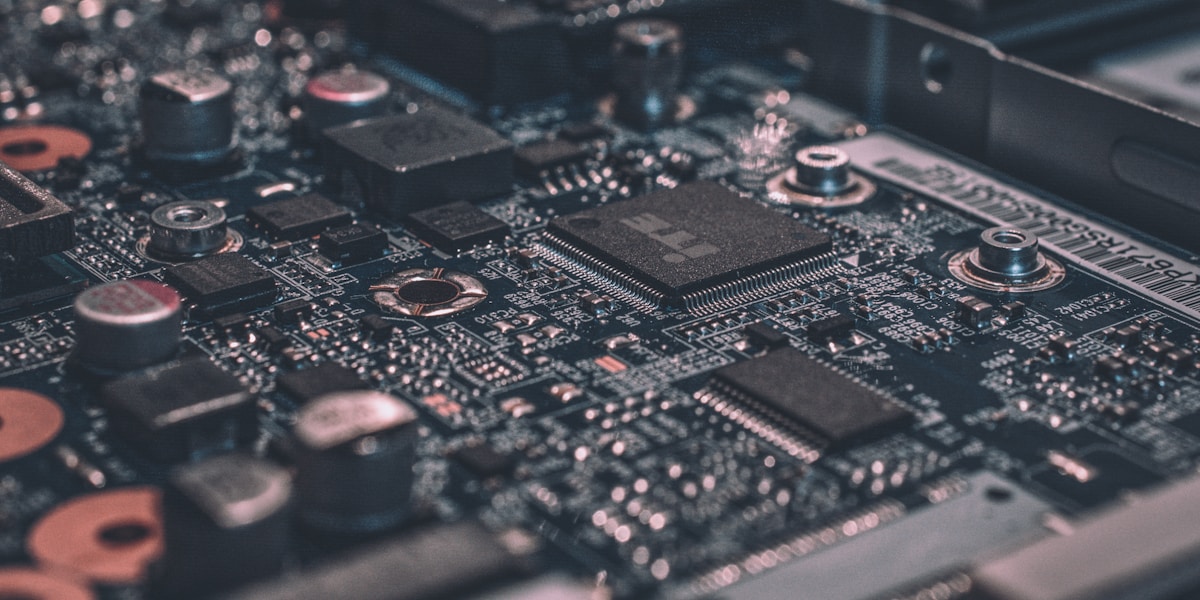
Tenstorrent represents one of the most ambitious bets in the semiconductor industry: a Toronto-founded startup taking on NVIDIA's near-monopoly in AI chips using open-source architecture and the industry's most legendary chip designer.
This is the complete guide to Tenstorrent—from its founding in Toronto to its 2.6B USD valuation, the RISC-V strategy that could reshape AI hardware, and why Jim Keller believes open-source can beat NVIDIA's lock-in.
What Is Tenstorrent?
Tenstorrent is a Canadian-American AI chip company building high-performance processors using RISC-V—an open instruction set architecture free from the licensing costs of x86 and ARM. Founded in Toronto in 2016, the company now maintains dual headquarters in Santa Clara and Toronto.
Quick Facts
Tenstorrent is positioning itself as the open-source alternative to NVIDIA—betting that customers want freedom from CUDA lock-in and that AI chips don't need expensive HBM memory to compete.
Who Founded Tenstorrent?
Tenstorrent was founded in 2016 in Toronto by three engineers who saw an opportunity in AI hardware.
The Founding Team
The founders saw a significant opportunity in what they called "Software 2.0"—the shift from hand-coded algorithms to machine learning models that require massive computation. Traditional CPUs and even early GPUs weren't designed for this workload.
The Jim Keller Era
In early 2021, Tenstorrent made a move that sent shockwaves through the semiconductor industry: they recruited Jim Keller as CTO.
Keller is arguably the most respected chip architect alive. His resume reads like a history of modern processor design:
Keller became CEO in 2023, swapping roles with founder Ljubisa Bajic, who stepped back to an advisory role. Under Keller, Tenstorrent grew from 60 to 300+ employees.
"You can't beat Nvidia if you use HBM. Their buying power makes it impossible to compete on cost if you use the same components." — Jim Keller, on Tenstorrent's strategy
What Is Tenstorrent's Technology?
Tenstorrent's technology bet is fundamentally different from NVIDIA, AMD, or Intel. The company is building on RISC-V and designing chips specifically to avoid the expensive components NVIDIA dominates.
RISC-V: The Open-Source Advantage
RISC-V is an open instruction set architecture that has grown in credibility across the semiconductor industry. Unlike x86 (Intel/AMD) or ARM, anyone can implement RISC-V without licensing fees—and can modify it freely.
Ascalon: The CPU Core
Tenstorrent's Ascalon-X is the company's high-performance RISC-V CPU core:
Ascalon is positioned as an "ARM killer"—a RISC-V core that can compete with Apple and ARM designs in data centers.
Tensix: The AI Core
The heart of Tenstorrent's AI accelerators is the Tensix processor:
The decision to use GDDR6 instead of HBM (High Bandwidth Memory) is deliberate. HBM is expensive and NVIDIA buys most of the world's supply. By designing around GDDR6, Tenstorrent avoids that bottleneck.
What Products Does Tenstorrent Make?
Tenstorrent has shipped three generations of AI accelerators, with a fourth in development.
Product Timeline
Grayskull
The company's first Tensix Processor, featuring:
- Up to 120 Tensix Cores with 1MB SRAM each
- 8GB LPDDR4 memory
- Available as e75 and e150 boards
- Designed for inference workloads
Wormhole
A significant upgrade with scale-out capabilities:
Wormhole's most distinctive feature is its networking: multiple Wormhole cards can link together over 400G Ethernet to create one large accelerator—similar to NVIDIA's NVLink but using standard Ethernet.
Blackhole
The latest generation uses chiplet architecture on Samsung's 4nm process:
- 768 total RISC-V cores
- 16 "big" CPU cores capable of running Linux
- 752 "baby" cores for compute workloads
- Mesh topology
- Designed for competitive datacenter performance
CES 2026: Razer Partnership
At CES 2026, Tenstorrent unveiled its first compact AI accelerator device designed in partnership with Razer—bringing AI acceleration to consumer/prosumer markets.
How Much Funding Has Tenstorrent Raised?
Tenstorrent has raised approximately 1.18B USD across 10 funding rounds.
Funding History
Notable Investors
Valuation Trajectory
Tenstorrent has also secured nearly 150M USD in customer contracts, including agreements with Samsung for manufacturing and Hyundai for automotive AI systems.
What Are Tenstorrent's Key Partnerships?
Tenstorrent has built strategic partnerships across the semiconductor supply chain.
Manufacturing Partners
Customer/Product Partners
Leadership Additions
In 2023, Raja Koduri—former Intel graphics chief and AMD Radeon leader—joined Tenstorrent's board of directors, adding another legendary chip industry figure to the company's leadership.
How Is Tenstorrent Competing with NVIDIA?
Tenstorrent's strategy deliberately avoids competing head-to-head with NVIDIA on the same terms.
Competitive Strategy
The Export Advantage
NVIDIA's most powerful GPUs (H100, H200, Blackwell) face export restrictions—they cannot legally ship to China, the world's second-largest AI market. Tenstorrent, as a Canadian company with open-source architecture, faces fewer such restrictions.
"There's a massive potential market for non-NVIDIA AI accelerators that can legally ship to China." — Industry analyst observation
Target Markets
Tenstorrent is focusing on segments where NVIDIA is less dominant:
The AMD Zen Playbook
Keller is applying the strategy that revived AMD: first-generation products prove the architecture works, second-generation becomes competitive, third-generation leads the industry.
What Is Tenstorrent's Canadian Presence?
Despite moving headquarters to Santa Clara, Tenstorrent maintains significant Canadian operations.
Toronto Office
Canadian Tech Ecosystem
Tenstorrent represents a different kind of Canadian AI success—hardware rather than software:
Canadian VC Involvement
Real Ventures, a prominent Montreal-based VC firm, was an early investor in Tenstorrent—part of the Canadian deep tech investment ecosystem that also backed D-Wave and other hardware companies.
Frequently Asked Questions
What is Tenstorrent?
Tenstorrent is a Canadian-American AI chip company founded in Toronto in 2016. Led by legendary chip architect Jim Keller, the company builds AI accelerators and RISC-V CPUs as an open-source alternative to NVIDIA. Tenstorrent has raised over 1.18B USD and is valued at 2.6B USD as of December 2024.
Who is Jim Keller?
Jim Keller is Tenstorrent's CEO and one of the most respected chip architects in the semiconductor industry. His career includes leading AMD's Zen architecture (which revived AMD), designing Apple's A4 and A5 chips, creating Tesla's self-driving processor, and working on processor designs at DEC, Intel, and now Tenstorrent.
What is RISC-V and why does Tenstorrent use it?
RISC-V is an open-source instruction set architecture that anyone can implement without licensing fees—unlike x86 (Intel/AMD) or ARM. Tenstorrent uses RISC-V because it allows full customization, avoids licensing costs, and isn't subject to the same export restrictions as proprietary architectures like NVIDIA's CUDA.
How is Tenstorrent different from NVIDIA?
Tenstorrent competes with NVIDIA by using open-source architecture (RISC-V vs proprietary CUDA), commodity memory (GDDR6 vs expensive HBM), and open software tools. This makes Tenstorrent chips potentially more affordable and customizable, though NVIDIA maintains advantages in ecosystem maturity and raw performance.
What products does Tenstorrent make?
Tenstorrent makes AI accelerator chips including Grayskull (entry-level inference), Wormhole (datacenter scale-out), and Blackhole (4nm high-performance). They also license their Ascalon RISC-V CPU cores and Tensix AI cores to other companies building custom chips.
Who has invested in Tenstorrent?
Tenstorrent's investors include Bezos Expeditions (Jeff Bezos' family office), Samsung Securities, Hyundai Motor Group, LG Electronics, Fidelity, and Real Ventures. The company raised 693M USD in December 2024 at a 2.6B USD valuation.
Where is Tenstorrent headquartered?
Tenstorrent was founded in Toronto in 2016 and later moved its headquarters to Santa Clara, California while maintaining a significant Toronto presence. The company also has offices in Austin, Belgrade, Tokyo, and Bangalore.
Can Tenstorrent compete with NVIDIA?
Tenstorrent isn't trying to beat NVIDIA's H100 today. Instead, it's building for 2027-2030 using the same playbook Jim Keller used at AMD: first-generation proves the architecture, second-generation becomes competitive, third-generation leads the industry. Tenstorrent also targets markets NVIDIA doesn't serve well—edge AI, automotive, and export-restricted countries.
Related Reading
Canadian Deep Tech
- D-Wave Complete Guide — Canada's quantum computing pioneer
- Xanadu Photonic Quantum Guide — Toronto's photonic quantum company
- Sanctuary AI Complete Guide — Vancouver's humanoid robotics
Canadian AI Ecosystem
- Toronto AI Ecosystem Guide — The city's AI landscape
- Canadian AI Unicorns — Billion-dollar AI companies
- Canadian AI VCs Directory — Who funds Canadian AI
AI Hardware Industry
- AI Salaries Canada 2026 — Compensation including hardware roles
- Waterloo-Toronto Corridor — The tech ecosystem
Join AGI House Canada to connect with Toronto's AI hardware community. Scan the QR code to join our WhatsApp group or subscribe to our newsletter.
Data current as of January 2026. Information from Tenstorrent, BetaKit, TechCrunch, EE Times, AnandTech, SemiAnalysis, Tom's Hardware, and company announcements.


